

 Australia
 USA
USA UK
UK Ireland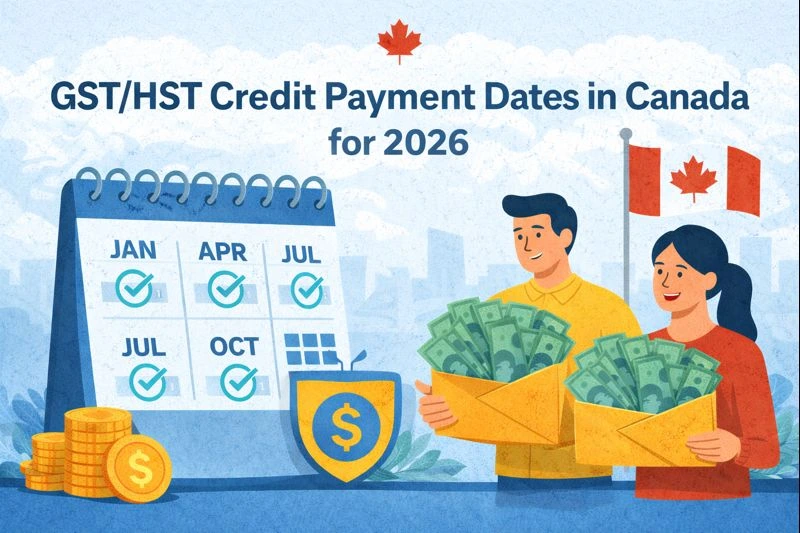




As the cost of living rises, housing prices grow, and daily expenses are putting a strain on narrow budgets, benefits related to government assistance (such as the GST/HST credit) have become even more essential, particularly to those in the Gen Z and Millennial age brackets, who must juggle early life, freelance work, college debts, and the rise in living costs. GST/HST credits are considered to be one of the most popular tax-free benefits among Canadians since federal estimates show that millions of Canadians receive them annually. These quarterly payments assist several households in meeting their basic needs like food, electricity, transport, and childcare.
To know the payment dates of Canada GST 2026 is very crucial since the eligibility and date of payment would greatly rely on CRA files and the payment status of tax filers. Regardless of whether they have reported late, relocated without changing their address, or were not fully aware of how the credit works, there are thousands of eligible Canadians who go without the payments annually. This is an explicit and profound description of the credit of the GST/HST service in the year 2026, what the credit is, who qualifies to attain credit, how much credit you can have, and the manner in which the credit is paid out by the Canada Revenue Agency.
What Is the GST/HST Credit?
The GST/HST credit refers to a form of non-taxable financial assistance issued by the federal government to assist qualified Canadians in reducing the influence of goods and services tax (GST) and harmonized sales tax (HST) on their daily shopping. In contrast to tax refunds, this credit is not based on the amount of tax paid during the year and is also not subject to whether or not he has to pay taxes on income.
The GST/HST credit is administered by the Canada Revenue Agency and is paid quarterly, giving a guaranteed flow of financial assistance instead of a lump sum annually. This structure renders the benefit very handy in budgeting and controlling the ongoing living costs.
Among younger Canadians, students, and first-time taxpayers, the GST/HST credit is misconceived or sometimes disregarded. A large number of individuals feel that they are not eligible because of their low income or working part-time, when, on the contrary, these factors tend to make them eligible.
Who Is Eligible for the GST/HST Credit?
The CRA automatically evaluates an individual based on whether he or she is eligible to receive credit in GST/HST based on the completion of the T1 personal income tax return. It does not require a separate application, and not making the application is a guarantee that you will not get the credit, whether you were eligible or not.
In general, you may qualify if:
- Age at the month of payment is 19 years and above.
- You are a Canadian resident for income tax purposes.
- The net income is below the CRA limits.
- You are required to file an income tax annual return, although you may have zero income.
Persons aged below 19 can also be eligible in some cases, like being a husband or common-law companion, or the parent living with their child.
Family and marital status also affect eligibility, as well as the amount of payments made. Marriage, separation, divorce, or children may have a major impact on GST/HST credits. The CRA is based on valid household details; this is the reason why it is essential to update personal details.
Eligibility is also affected by changes in year-by-year income. An increase or decrease in salaries, a transfer, or just a loss of income by any other means can result in the future payment being either high or low, depending on the situation you face.
Pro Tip: To keep your GST/HST credit going successfully, the only thing to do is to complete your tax return annually, even without income.
When Are the GST/HST Payment Dates?
The GST/HST credit payments by the Canada Revenue Agency are given out regularly every quarter of the year, thus giving steady financial support for the whole year instead of having a single annual payment. These payments are made way beforehand and are consistent in a trend; thus, these allow people and families to think through their monthly bills more efficiently.
To the majority of beneficiaries, the GST/HST checks are released on the 5th day of the payment month. When this date is a weekend or any statutory holiday, the CRA usually pays the money the day before. This program applies to all parts of the country and to both direct deposits and checks.
It is especially necessary to know the Canada GST payment date 2026, in case other people susceptible to a variety of government benefits take it into account, because GST/HST credits tend to coincide with other programs subject to CRA regulation. Data on the actual dates of payment is also helpful, as it enables the recipients to trace delays or even missing payments promptly.
Expected GST/HST Credit Payment Dates for 2026
Although the CRA verifies dates nearer to the payment period, the GST/HST credit is usually on this quarterly schedule:
- January 2026 – Winter quarter repayment.
- April 2026 – Spring quarter payment.
- July 2026 – Summer quarter payment
- October 2026 – Fall quarter payment.
These are the exact dates of the monthly payments of standard GST/HST credit. The CRA tends to announce any changes.
Moreover, it could be noted that any special or temporary GST relief payments that are to be introduced in 2026 can take differing timelines. These supplies for relief do not come annually and have to do with the news of the federal budget.
How Much GST/HST Credit Will You Get?
The credit amount you will get in 2026 as part of the GST/HST is also based on multiple personal and financial elements that the CRA will be evaluating. Instead of a fixed benefit, the GST/HST credit is an income-tested benefit, i.e., the amounts paid to a beneficiary decrease as income increases.
The calculation of the amount of your credit is based on:
- Adjacent family net income of the past tax year
- Your marital status/common-law status.
- The eligible number of children is below 19.
- Any other GST relief payments for which one is eligible.
People and families with lower incomes usually pay more GST/HST, whereas those earning higher incomes than the CRA have a chance to pay less or not at all.
Since the amount of GST/HST credit may vary each year, the best way to ensure that you are entitled is to look at your Notice of Assessment. Further payments can be directly influenced by anything that alters the income of the family or changes their situation.
Pro Tip: The slight increase in income leads to cutting the GST/HST credit, so one should think in advance and watch the notices of CRA with care.
How Will You Receive the GST/HST Payments?
CRA makes payment of GST/HST via direct deposit or a postal mail check (by cheque), depending on your account preference. Direct deposit is highly encouraged, as it removes delays in the delivery of funds and makes it more dependable.
To better understand the process, this is how the process of achieving the GST/HST credit normally proceeds:
Step 1: Check Your CRA Information
Should employees be given payments, keep your personal information, including your banking details, updated on your CRA account. These are your mailing address, direct deposit details, and household details of your marital status and dependents. The problem of outdated or erroneous information may lead to late or absent payments.
Step 2: CRA Processes Your Payment
When you have been verified, the CRA will determine the GST/HST credit you would get, depending on the income tax returns and household details from last year. The payments will then be scheduled at quarterly disbursement based on the CRA payment schedule.
Step 3: Receive Your Payment
When you are under direct deposit, the currency will be posted in your bank account on the date of payment.
In the event the payment received is in the form of a check, the CRA sends the check to an address on file. There are chances of variation in delivery time and delays in checks due to the postal service and wrong addresses.
Step 4: Confirm Receipt
After every due payment, it is a good habit to check your CRA account or bank statement. When payment is not received, you can very easily know whether it has been delayed, lost, or forwarded to a different account.
Step 5: Report Change Timely
Any alteration of your banking details, mailing address, or family status must be made instantly in your CRA account. This guarantees continuity of payments of GST/HST credit in the future and proper recalculation.
Pro Tip: Receiving GST/HST payments via direct deposit is the quickest and most secure method and does not take up time due to postal delays.
When Will Your GST/HST Credit Be Recalculated?
The GST/HST credit is recalculated every year once the income tax return T1 is processed by the CRA. This will make sure your payment will depend on your present financial status, matrimonial status, and family size.
Recalculation normally has the impact of adjusting the July-to-June payment period of the next year. The updated payments will reflect any major changes in your circumstances; these changes may be a raise, a change of job, marriage, or the introduction of children.
The recalculation is also postponed due to the late filing of your tax; hence, this will lead to your quarterly payment being delayed until your returns are processed by the CRA. That is why it is important to submit the filing in due time to prevent gaps in obtaining the credit.
In case of an extreme increase in your income or any change in the number of people in your family, then your payment will be reimbursed or adjusted. On the other hand, payments might go up as a result of reduced income or the presence of more dependents.
Frequent review of your CRA account to update personal details makes GST/HST credit payments accurate, timely, and uninterrupted, and you can rest peacefully throughout the year.
Why Filing Your T1 on Time Matters?
One thing alone that you are likely to do to keep your GST/HST credit flowing uninterrupted is to ensure that you file your T1 personal income tax return on time. CRA depends on your tax posting to establish your eligibility, the money you will be using, and the payments. The slightest delay may lead to delayed payments, delays in recalculation, or credits.
The key reasons behind why timely filing is important are as follows:
- Eligibility Check: The CRA will use your T1 to verify your income and marital status, as well as your dependents. If you do not file a return, you can be disqualified.
- Correct Payment Amounts: It is always important that your credit reflects the current situation so that you do not pay more or less than you should.
- Consistent Quarterly Payments: Missing your payment terminates the situation of your quarter payments being terminated until the submission and processing of your quarterly return by CRA.
- Access to Retroactive Payments: Due Date (on time or bringing up missed surveys). You got the opportunity to claim your past credits on GST/HST.
Pro Tip: To ensure that you are eligible to receive a GST/HST credit, you must ensure that you file a tax return each year.
What to Do If Your GST Credit Is Late or Missing?
In some instances, GST/HST credit payments are not received as expected. The knowledge about the right moves can assist you in resolving the matter as soon as possible.
Always make sure to view your CRA My Account before proceeding to make an activity, and that you have the correct personal information, banking information, and mailing address. Sluggish payments usually happen due to inaccurate records and not the faulty calculations in CRA.
Guidelines to be used in case your GST/HST credit is late or missing:
- Check Your Payment Status: Your CRA account and recent Notices of Assessment should be examined to verify the amount and date on which payment occurred.
- Check Personal Data: Have your banking and mailing address, as well as household information, updated.
- Allow Processing Time: If you currently have a tax return that was recently submitted, then wait at least 10 business days before the CRA handles payments.
- Contact the CRA: Paying the money is still missing—contact the CRA to clarify and provide advice on how to solve the problem.
When Professional Tax Assistance Helps
GST/HST credits can be handled by most Canadians with no professional help, although consulting the professional tax group may save time and avoid errors in more complicated cases.
You can have the assistance of the tax workers:
- Check Eligibility: Once you are sure you qualify and/or not, check the eligibility status in terms of income and family status to receive GST/HST credits.
- Appeal Missing Payments: Communicate with the CRA on your behalf to resolve outstanding debt or payment defaults.
- Late or Recalculated Returns: Past returns that have not been attempted late are to be filed appropriately to reclaim retroactive credits.
- Keep Accurate Records: Assist with transcription of CRA records to prevent future interruption of payment.
Hiring a professional can give a sense of relief and help you to enjoy the maximum benefits you deserve without much unnecessary stress.
Haven’t Received Your GST/HST Credit?
Delayed payments can result from late tax filing, outdated CRA information, or changes in your personal circumstances. Get professional help reviewing your tax filing and CRA records.
Final Thoughts!
The GST/HST credit is a good financial aid programme for millions of Canadians, particularly for Gen Z and Millennials who have entered early careers and increased living expenses. You may maximise the benefit by knowing the date of payment, filing deadline, eligibility conditions, and how the CRA undertakes the payments in order to avoid missed or delayed payments.
Filing on time and keeping proper CRA records, as well as getting professional help when required, helps to ensure that there are no disruptions in GST/HST credits. Being aware of how much you pay will enable you to spend your budget and take advantage of the available support provided by the government.
People Also Ask
1. Do I need to apply for the GST/HST credit?
No, when you file your T1 tax, it is automatically established whether you are eligible or not.
2. Can I get professional help with GST/HST benefits and CRA issues?
Tax professionals would be able to help with eligibility, overdue payments, and CRA correspondence, yes.
3. Can GST payments be stopped or clawed back?
Yes, in case of a rise in income, a change in family status, or not filing a tax return.
4. Does changing my marital or family status affect payments?
No, any of these can add to or subtract from the GST/HST credit because of marriage, separation, or having children.
5. Can new residents of Canada receive GST credits?
Yes, whenever they become tax residents and submit a tax filing.
6. Do students qualify for GST/HST credits?
Yes, students can be eligible because their income should be lower than CRA thresholds, and they should file a tax return.