

 Australia
 USA
USA UK
UK Ireland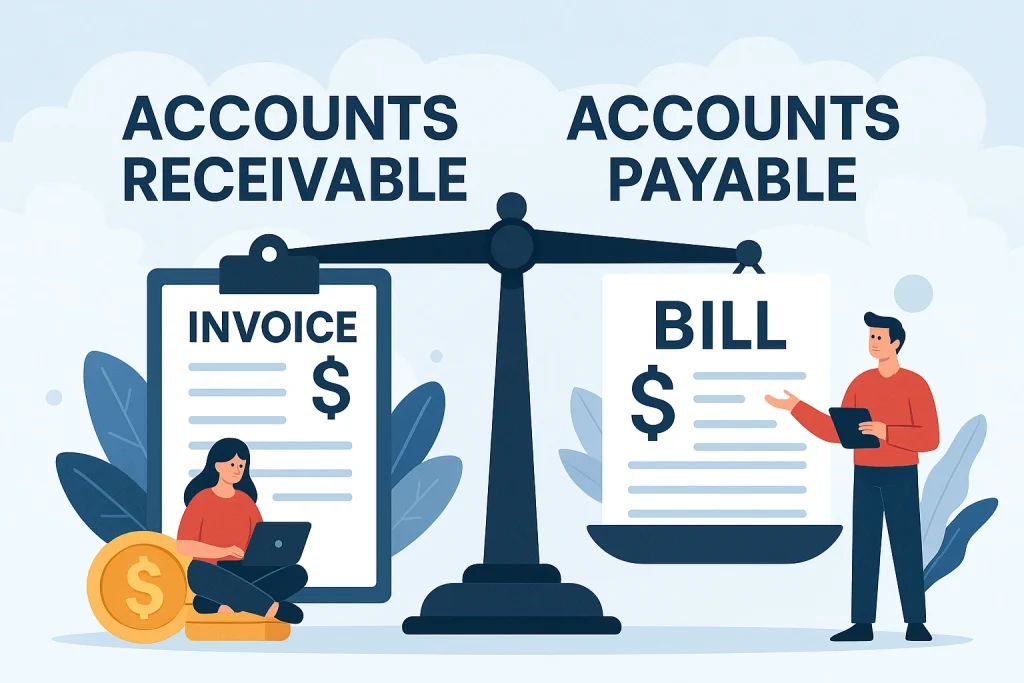




For many small businesses, keeping the books of finances in order can get difficult the moment transactions begin flowing in and out. Two terms play a significant role in this process: Accounts Receivable (AR) and Accounts Payable (AP). Although they may appear simple at first glance, they have an immediate impact on a company’s stability, growth, and long-term financial success. AR represents the money that your customers owe you – future cash that you expect to receive. AP, on the other hand, represents the money your business owes suppliers – cash you need to pay out to keep operations flowing smoothly.
Every SMB, whether new or growing, must have a clear understanding of how AR and AP work, as these two functions determine how much cash the business has at any given time. When AR is good and funds are received on time, then a business has a healthy cash inflow. When AP is appropriately managed, expenses are controlled, suppliers stay happy, and the company incurs no unnecessary penalties. Understanding both sides helps business owners make informed decisions, avoid financial bottlenecks, and lay a foundation for sustainable growth.
What Is Accounts Receivable?
Accounts Receivable (AR): It is the amount of money your customers owe after you have bought your products or services on credit. Instead of paying immediately, customers agree to pay within a defined period — often 15, 30, or 45 days. This outstanding amount becomes your receivable; i.e., you are basically promising future cash. AR is reflected as a current asset on the balance sheet because it represents money due in the near future.
AR is relevant because it directly affects your ability to keep daily operations running. When customers pay on time, your business will have consistent cash available to pay payroll, maintain inventory, and grow. But when invoices are delayed or ignored, even a profitable business can struggle to pay its bills. For example, if you deliver a project for $5,000 and let your customers pay you within 30 days, that $5,000 is included in your AR. Until that money is collected, it cannot support your operational needs. Strong AR management-Incorrect invoicing or incorrect billing, as well as regular follow-ups, can ensure your business is staying financially afloat.
What Is Accounts Payable?
Accounts Payable (AP) refers to the money your business owes to suppliers, vendors, or service providers. These obligations are incurred when your company receives goods or services, even if you have not paid for them yet. AP is akin to a current liability as it shows items you need to pay within a short period, which can be anywhere between 30 and 90 days based on the contracts you have agreed upon with the supplier.
AP plays an essential role in controlling expenditure and maintaining professional relationships. On-time payments to vendors help ensure that your business can obtain favorable credit terms, avoid late fees, and maintain trust with suppliers who are integral to your operations. For example, if you are buying $2,000 worth of inventory and have an invoice due in 30 days, that invoice will be part of your AP. Managing this effectively means carefully reviewing invoices, double-checking quantities, and spreading payments so that your cash outflow rate matches your cash inflow rate.
When AP is not managed effectively, whether through overdue payments, lost invoices, or disorganized approval processes, businesses can experience cash shortages, strained vendor relationships, and unnecessary financial risks. Proper AP management ensures smoother operations and prevents disruptions caused by short-term financial miscalculations.
What Is the Difference Between Accounts Receivable And Accounts Payable?
Although Accounts Receivable and Accounts Payable are closely related, they serve opposite functions. AR is involved in incoming cash, while AP is involved in outgoing cash. Both are on the balance sheet, but on entirely different sides: AR as an asset and AP as a liability.
Below, we provide a detailed comparison so that the owners of the SMB’s can easily understand the difference between the two:
Category |
Accounts Receivable (AR) |
Accounts Payable (AP) |
|
Definition |
Money owed to the business by customers |
Money the business owes to suppliers or vendors |
|
Role |
Records future income and credit sales |
Records future expenses and obligations |
|
Balance Sheet Placement |
Current Asset |
Current Liability |
|
Cash Flow Impact |
Increases cash flow when collected |
Decreases cash flow when paid |
|
Examples |
Client invoices, installment payments, and credit terms |
Supplier invoices, rent, utilities, contractor fees |
|
Key Objective |
Speed up customer payments |
Manage expenses and pay vendors on time |
|
Primary Activities |
Invoicing, collections, and credit management |
Invoice approvals, vendor communication, and payment scheduling |
This comparison makes one thing clear: AR enhances liquidity, while AP requires businesses to manage cash responsibly. When used in conjunction, they form a balanced financial system for stable growth.
Receivables and Payables Explained for SMB Owners
For small business owners, AR and AP are more than just two words on the accounting page – they are key components required for control over finances. Accounts Receivable indicate how much money is expected to come in in the near future, helping owners plan budgets and make decisions without worrying about cash flow. It provides insight into customer behavior, revenue trends, and the business’s ability to convert sales into cash.
Accounts Payable, on the other hand, provides transparency into expenses and financial obligations in advance. AP makes it easier for owners to understand when money will be leaving the business, how much the owner owes the company at any given time, and whether the owner is maintaining healthy relationships with suppliers. When both AR and AP are continuously monitored, SMB owners have a clear picture of their financial position and avoid surprises such as cash shortages or overdue accounts.
Eventually, receivables and payables are the bones of day-to-day cash flow. When these processes are organized and aligned, business operations run smoothly, financial stress lessens, and owners are free to focus on growing the business rather than scrambling to pay bills or raise money.
How AR and AP Affect Cash Flow?
Cash flow is the actual movement of money through your business, and AR and AP directly influence how strong or weak that flow is. When customers delay paying their bills, Accounts Receivable starts to age, and cash flows slowly in. Even if sales appear robust on paper, delayed collections can create bottlenecks and leave the company short of cash to pay for supplies, payroll service, and other essentials.
Accounts Payable has an equally important effect. Paying suppliers early could deplete cash that’s not needed, while payment delays could result in penalties or strained relations. The idea is not just to pay fast but to pay strategically – i.e., to make payments coincide with the cash inflow so that the balance of payments remains healthy.
Together, AR and AP make up the cash conversion cycle, a measure of how efficiently a business converts its operations into cash. Shortening this cycle, for example, by taking payments more quickly and managing outgoing payments wisely, makes it easier to prepare for and avoid financial stress. When AR and AP are optimized, businesses can remain stable even during both slow and rapid growth periods.
What Do Accounts Payable and Accounts Receivable Have in Common?
While the focus of AR and AP are opposite, the two do have several significant similarities that are vital to establishing a firm financial footing. Both are essential components of day-to-day bookkeeping, and both should be tracked regularly to ensure accurate financial statements. Both affect cash flow, either making it flow smoothly in and out of the business. They also need organized processes, clear communication, and proper documentation to minimize errors and enable transparency.
Another crucial similarity is the relationship between them and compliance. Whether handling AR or AP, businesses need to comply with accounting standards, such as GAAP, to ensure revenue and expenses are recorded correctly and that financial reports are trustworthy. In addition, both AR and AP also benefit significantly from automation. Digital tools have reduced manual work, minimized mistakes, and provided real-time visibility, helping small businesses be more innovative in how they make financial decisions.
Ultimately, AR and AP are primarily focused on a shared objective: keeping the business financially fit by ensuring money flows where it should, when it should, and how it should. When both functions run smoothly, businesses gain control over their finances and the stability required for long-term success.
Best Practices for Managing AR and AP
Efficient management of Accounts receivable and Accounts payable is critical to maintaining stability and avoiding cash flow imbalances. One of the most effective ways to enhance both processes is automation. Digital tools help reduce the need to process invoices, keep track of invoice due dates, send reminders, and reduce human errors, which are often factors in payment delays. Automation also provides a clear picture of outstanding balances, so all business owners can spot problems before they spiral out of control.
It is also essential to ensure that payment terms are clear. For AR, having expectations noted upfront for customers, such as due dates, accepted payment methods, and late fee policies, will help customers understand their responsibilities. For AP, it can help your business to get breathing room with suppliers if you can negotiate good terms. Consistent follow-ups are also quite important. Timely reminders for overdue invoices or pending approvals prevent anything from getting lost in the day-to-day chaos.
Establishing approval flow keeps both AR and AP organised and accountable. Proper documentation, such as purchase orders, invoice verification, and signed agreements, minimizes the likelihood of disputes. Strong communication with vendors and customers can ensure smooth transactions, while regular financial reporting can help business owners identify trends and patterns, forecast cash flow, and make strategic decisions. By combining these best practices, SMBs have greater control over their cash flow and less disruption to their finances.
GAAP Compliance for Accounts Payable and Receivable
Following Generally Accepted Accounting Principles (GAAP) is imperative for producing accurate, transparent, and legally compliant financial records. Under GAAP, revenue is recognized only when it is earned, not when cash is collected. This includes businesses clearly recording each sale and ensuring each invoice accurately reflects the amount, date, and service provided. Proper documentation is also a benefit of audit-readiness and can help demonstrate that receivables are legitimate and appropriately valued.
In the case of Accounts Payable, GAAP requires expenses to be recognized when they are incurred, even if payment is made later. This ensures that financial statements accurately reflect operational costs and that businesses don’t understate their liabilities. Maintaining organized records: Although contracts with suppliers and payment receipts for purchases, etc., are records for compliance and accurate reporting, keeping them organized is a must.
GAAP also requires consistent internal controls to prevent fraud and errors, and duplicate payments. Regular reconciliation between invoices, bank statements, and ledger accounts helps confirm that all transactions are recorded appropriately. For SMBs, complying with GAAP is not only crucial for building confidence with lenders, investors, and partners, but also for ensuring that financial decisions are based on facts and reliable data. Compliance is the ultimate means of strengthening the integrity of both AR and AP processes and protecting the business against costly reporting mistakes.
When Should SMBs Consider Outsourcing AR and AP?
Many small businesses have been in operation long enough that handling AR and AP in-house becomes overwhelming or inefficient. One common trigger is excessive growth. With rising sales, the number of transactions, references, and vendors increases, and the volume of invoices, approvals, and follow-ups can quickly escalate. Without dedicated staff, businesses are likely to experience delays in collections, unpaid bills, or disorganized records. Outsourcing is particularly valuable during periods of high growth because experienced teams can take on the workload without compromising accuracy.
Cash flow problems are another indicator that outsourcing may be necessary. When overdue invoices pile up or payments are made without proper scheduling, the business can suddenly feel financial strain. Outsourcing helps ensure structure in the collection process, leading to consistent collections and greater control over outgoing payments. Similarly, businesses without in-house accounting expertise may struggle to remain compliant or manage complex financial processes.
If you’ve been experiencing invoice backlogs, errors, or record mismatches, you can restore efficiency by outsourcing. It also helps businesses navigate compliance issues — particularly those involving GAAP, tax, and industry-specific requirements. In short, SMBs should consider outsourcing when financial operations become too time-consuming, error-prone, or complex to manage internally.
How Outsourcing Helps Improve AR and AP Performance?
Outsourcing Accounts Receivable and Outsourcing Accounts Payable can be highly beneficial to one’s financial performance and adds expertise, technology, and efficiency to everyday operations. Professional AR teams will specialize in prompt invoicing, regular follow-ups, and structured collection techniques that will expedite incoming payments. This results in quicker cash flow, fewer overdue accounts, and improved overall financial status. For AP, outsourcing means getting invoices processed correctly and approved, and being paid on time without excessive delays or penalties.
Another big perk of this is reduced error. Outsourced teams trust in standardized workflows, quality checks, and automation tools that reduce the risk of mistakes and get every transaction appropriately recorded. This eliminates the need for messy financial statements and lessens the disputes with customers or vendors. Outsourcing also offers benefits reporting, providing SMB owners with real-time visibility into receivables, payables, and cash flow projections.
The most significant benefit is increased liquidity. With faster collections and better-controlled payments, businesses tend to have a healthier cash flow cycle, leading to greater confidence to invest, hire, or expand. Outsourcing is turning AR and AP from reactive functions into strategic ones that actively contribute to the business’s growth.
Keep Your Cash Flow Moving in the Right Direction
Faster collections and better-controlled payments can give your business greater visibility, fewer cash-flow surprises, and more control over day-to-day finances.
Final Thoughts!
Accounts Receivable and Accounts Payable may seem like mere bookkeeping boxes, but they have a far greater impact on an enterprise’s financial condition. When both processes are aligned (by which I mean the collections are timely and expenses are smartly managed), SMBs develop a healthy cash flow cycle, which promotes stability and long-term growth. A balanced approach ensures owners don’t experience any unexpected financial stress, keeps vendor and customer relationships in top shape, and also supports strategic decision-making based on reliable, robust data.
By following best practices, being GAAP-compliant, and considering whether outsourcing is an option, small businesses can work to make AR and AP an asset for transformation rather than a hindrance to administrative tasks. Ultimately, mastery of these functions allows business owners to do what truly matters: build a prosperous, resilient, and profitable company.
Frequently Asked Questions
1. Do SMBs need separate teams for Accounts Receivable and Accounts Payable?
Not always. Smaller businesses tend to have one person, or a small team, maintaining both functions. However, as the company expands, this merging of AR and AP can lead to inaccuracies and errors, and ensure that collection and payments are equally focused.
2. Which is more critical for cash flow: AR or AP?
Both are equally important. AR ensures the money flows into the business, and AP gets it out in a controlled manner. A good cash flow lies in the balance of the two – getting paid on time and having a strategic plan for expenses.
3. How can I improve my Accounts Receivable collections?
Start now, get more precise payment terms, issue invoices as soon as possible, follow up consistently, and utilize automation for reminders and payment tracking. Offering different payment methods and introducing late fees may also help increase payments.
4. How do poor AP practices impact a business?
Weak AP management can lead to late fees, damaged supplier relationships, duplicate payments, budgeting problems, and sudden aridity. It may also lead to inaccuracies in financial reporting, affecting business planning and compliance.
5. What happens if my AR is high but cash is still low?
This usually means customers are taking too long to pay, resulting in a delay in cash inflows. High AR with low money is a warning sign that there is room for improvement in collections. Strengthening invoicing processes, reminders, and credit policies can accelerate the conversion of AR into cash.