

 Australia
 USA
USA UK
UK Ireland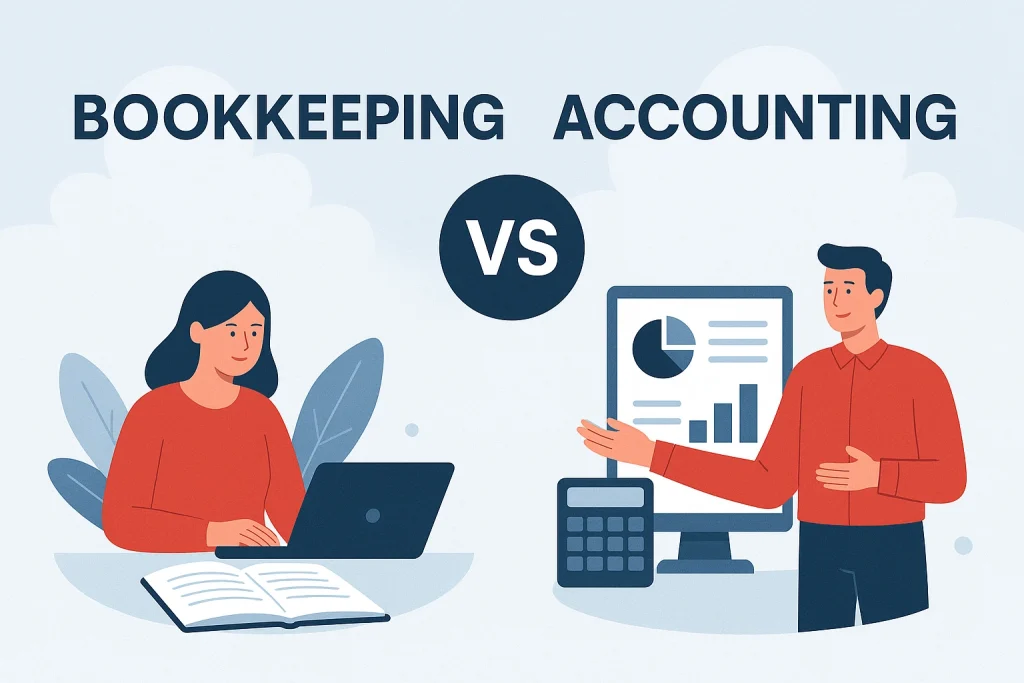




Bookkeeping and accounting are synonymous terms to most Canadian business owners- but they are not the same. As a matter of fact, a CFIB (Canadian Federation of Independent Business) report in 2024 revealed that 62% of small businesses incur financial losses annually due to poor record-keeping or delayed accounting, which is why it is so essential to understand the roles these functions play. Whether you are an eCommerce brand, a growing service business, or a startup, knowing the difference between what works and what doesn’t saves you money, time, and, pleasantly, surprising CRA fines.
Simultaneously, approximately 49% of Canadian SMBs outsource at least one financial activity, where bookkeeping and accounting lead the list. This change indicates an increasing recognition that financial precision and strategic intelligence are indispensable to long-term stability. This blog simplifies the differences between accounting and bookkeeping in a practical way, enabling one to make highly informed decisions about their business.
What Is Bookkeeping?
The organized system for recording all your business’s financial activities is bookkeeping. These include sales, expenses, invoice payments, payroll entries, and bank operations. It is important to note that a bookkeeper will ensure that transactions are accurately captured in your accounting system, keeping your financial data systematically organized, clean, and up-to-date.
Because of GST/HST filing, payroll compliance, and year-end preparation, all of which require exact figures in the Canadian business environment, bookkeeping is seen as the foundation of day-to-day financial management. There is no way you can tell how profitable you are, monitor how much you spend, or prepare a tax filing service without solid records. Bookkeeping is used to ensure that nothing is missed, including receipt, payment, and billing details.
Accounting also ensures transparency of your financial performance. It helps you understand how money is entering, where it is going, and how your business is functioning. No matter which cloud software you pick, QuickBooks, Xero, Wave, or another one, proper bookkeeping is the start of informed decision-making.
What Is Accounting?
Accounting also takes it a step further by strategically providing raw financial data. Bookkeeping is concerned with recording what happened, and accounting is concerned with analyzing why it happened and its future implications. The accountants can analyze profitability, cash flow trends, spending behaviour, and financial performance to help you understand the real health of your business.
Also, accounting is necessary to ensure your business remains compliant with CRA regulations. This will involve preparing financial and end-of-year reports, submitting corporate tax returns, claiming tax deductions, and planning for future taxes. Through accounting, businesses can save on taxes and make the most of their money.
Your growth strategy will also be supported by accounting. Accountants can assist you in making decisions related to expansion, investment, staffing, and sustainability through forecasting, budgeting, and financial planning. For most owners, accounting is a field where confidence is found in clarity.
Key Differences Between Bookkeeping and Accounting
Bookkeeping and accounting are closely related, though they serve different roles in managing a business’s finances. Bookkeeping records transactions day to day, and accounting interprets this information to assist with financial planning, compliance, and decision-making.
One brief but significant comparison is the following:
|
Aspect |
Bookkeeping |
Accounting |
|
Purpose |
Records daily financial transactions and keeps accounts organized. |
Analyzes financial data to create reports and guide business decisions. |
|
Scope |
Focuses on data entry, invoicing, bank reconciliation, and maintaining ledgers. |
Covers budgeting, forecasting, tax planning, compliance, and performance evaluation. |
|
Skill Level |
Requires accuracy, organization, and knowledge of accounting tools. |
Requires deeper financial expertise, analytical skills, and understanding of standards. |
|
Reports |
Produces basic summaries like ledgers and trial balances. |
Produces financial statements such as P&L, Balance Sheet, and Cash Flow. |
|
Role in Decisions |
Provides the raw data needed for analysis. |
Interprets data to influence operations and strategy. |
Functions of Bookkeeping — and How It Fits Into Accounting
The initial stage of the fintech process is bookkeeping. It is meant to make sure that your financial information is credible, organized, and exhaustive. It is not possible without proper bookkeeping services, as accounting would become meaningless or even impossible.
Getting accounts ready daily
The bookkeepers record all sales, expenses, payments, and deposits. This produces an effective financial trail, with no transaction untracked or unreported.
Invoice management and payment
They deal with outgoing invoices, vendor bills, and payment follow-ups. This is done to ensure a high level of cash flow and prevent late or default payments.
Balance accounts regularly
Bookkeepers reconcile your bank and credit card statements with the underlying records, detect discrepancies early, and ensure financial records remain accurate.
Arranging receipts and paperwork
They ensure that all financial activities are supported by the necessary documentation during audits or CRA reviews.
Keeping records and ledgers updated
Properly sorted ledgers enable accountants to prepare accurate reports and provide valuable insights into the future.
How Bookkeeping Fits Into Accounting
Accounting relies solely on the quality of bookkeeping information. If the books are inaccurate, there will also be inaccurate reports in the accounting, financial statements, and tax returns. To put it another way, bookkeeping generates the data–and accounting derives meaning out of the said information.
Functions of Accounting
Accounting works with structured financial information generated during the bookkeeping process and transforms it into information used for business decision-making. Whereas the former focuses on the past in recording financial history, the latter helps interpret the present and plan for the future.
The following are the key points of accounting functions, and each has been elaborated in terms of its explanation required of the extent of its significance to your business.
Preparation of Financial Statements
The main financial statements prepared by accountants include the balance sheet, income statement, and cash flow statement. With these reports, you have precise knowledge of profitability, assets, liabilities, and cash movements, so you can assess whether your business is financially healthy.
Profitability and Financial Trends Analysis
This is a check on revenues, expenses, margins, and performance trends. Accountants enable you to make smarter operations and strategic choices by determining which areas are profitable and areas your business can save on costs.
Ensuring CRA Compliance
Accountants also confirm that your business complies with all Canadian tax and financial reporting regulations. This involves proper tax treatment, correct labeling of transactions, compliance with the risk of penalties or audits, and adherence to the CRA policy.
Handling Tax Planning and Filing
In addition to filing annual tax returns, accountants assist in arranging your funds most profitably in accordance with the law. They will also lead you on deductions, GST/HST, credits, and year-end planning to ensure that your business is efficient and compliant.
Budgeting, Forecasting, and Financial Planning
The accountants come up with projections that are the future of your financial forecast, and they will give you an expectation on where the cash will flow, growth prospects, and the risks to be expected. This helps with long-term strategic decisions such as recruitment, growth, and economizing.
Why Do You Need Both Bookkeeping and Accounting?
It might be essential to understand the difference between bookkeeping and accounting; however, it would be equally important to know why your business requires both. They make a whole financial ecosystem together: bookkeeping lays the groundwork, and accounting provides a plan. Accuracy, compliance, clarity, and financial management. When they work together, these two functions enhance the precision of your business operations.
The most important reasons are discussed below:
To Keep Accurate and Orderly Financial Records
Bookkeeping only ensures that all transactions are correctly recorded; validating and interpreting these records is the job of accounting. Your tax returns and financial statements would not be good without correct books.
To Be Tax Ready All Year Round
Keeping your data clean and up to date involves bookkeeping, and planning how to file taxes accurately and recommending a tax strategy are accounting tasks. They act as a team to prevent rejected deductions, penalties, and delays in filing.
To Confidently Make Business Decisions
Bookkeepers are those who record what is coming in and going out, whereas accountants are those who predict the financial patterns of those figures. This combination will make you realize profitability, growth potential, and operational risks.
To Avoid Cash Flow Problems
Proper bookkeeping helps you identify your spending and revenue trends, and accounting enables you to plan for your future cash needs. This saves you the surprises of insufficient availability and financial tight spots.
To Finance Growth, Investment, and Expansion
Clean books and professional financial statements are needed by banks, investors, and the grant programs. Bookkeeping provides the information, and accounting produces the reports and plans necessary to secure funding with ease.
The Roles: Bookkeeper vs Accountant
In the information on the specific responsibilities of each position, you can tailor your financial processes. They do not have the same work or skill sets despite their close collaboration. The following is elaborated in points under bullets; each point is significant and well articulated to provide a clear picture of how the two roles play into your business.
Bookkeeper
- Keeps your financial records current by accurately recording all your daily financial transactions, such as sales, invoices, payments, and expenses, so that your financial information is updated.
- Balances bank and credit card accounts regularly, to detect any anomalies early enough before making any mistakes that can lead to errors either in tax filing or reporting in the future.
- Classifies financial details like receipts, vendor bills, and payroll information, and has ensured that your business is audit-ready and is in compliance with documentation mandates.
Accountant
- Previews and reviews financial information to offer beneficial results in the form of reports so you can know profitability, expenses, and long-term trends.
- Takes care of tax planning, CRA compliance, and annual filings, to be sure that your business is operating in accordance with the Canadian tax laws, and it gets as many deductions as possible.
- Offers financial budgeting, forecasting, and strategic consulting to plan your future expansion, risk management, and make informed financial decisions.
When Does Your Business Need Both?
As your business matures, it becomes clear that you cannot operate solely on bookkeeping and need accounting as well. This shift occurs typically as operations grow and become more complex, or as financial decisions become more strategic.
The following are the most prominent instances, described in detail, in which your business requires the joint assistance of both bookkeeping and accounting.
1. When Your Volume of Transactions Grows
Increased sales, costs, and invoices imply complexity. Bookkeeping maintains your records in order, and accounting provides a broader view of the financial picture to help you plan your business.
2. When Tax Season or Preparing an Annual Report
Bookkeeping keeps your numbers clean and organized, but accounting is required to prepare accurate end-of-year statements, file taxes, and ensure CRA compliance.
3. When Applying to Secure Loans, Grants, or Funding
Lenders and government programs require financial statements done by professionals. The data is supplied in bookkeeping format, and accounting processes it into CRA-ready reports.
4. When Planning to Grow or Expand
With the scaling, accounting tools will be necessary to plan future expenses and cash flow, alongside strategic advisory, and bookkeeping will ensure your data is up to date.
How to Choose the Right Service Provider?
The problem of selecting a financial service provider is significant, as your bookkeeper or accountant will have a direct impact on your business’s long-term quality, compliance levels, and stability. No matter what your business is: startup, independent business owner, or a developing Canadian SMB, you must have the right partner who provides the experience and trustworthiness. The criteria listed below serve as a good checklist for assessing any service provider.
Need More Than Just Bookkeeping?
Keep your books accurate and get the accounting expertise you need for tax compliance, financial reporting, forecasting, and better business decisions.
Experience in Work with Canadian Small Businesses
An agent with knowledge of Canadian SMBs is conversant with GST/HST policies, provincial laws, payroll provisions, and CRA expectations. This ensures that your records and tax filings are correctly handled and comply with Canadian standards.
Cloud Accounting Tools Support
The current provider must be skilled in such solutions as QuickBooks Online, Xero, or FreshBooks. The beauty of cloud-based technology is that it helps you remove inaccuracies and simplify the reporting process, and it also allows you to access financial data at any time; as a result, the process will be more transparent and efficient.
Clear Pricing System with No Secret Fees
The appropriate provider will offer straightforward pricing, so you know exactly what you are paying for. Clear rates will prevent surprises in the sphere and let you organize your finances without any doubt.
Scalable Services Grow with You
Your provider should be able to provide bookkeeping, accounting, payroll services, and advisory services that grow as your business grows. Scaling can help ensure you are not limiting or requiring service changes due to financial constraints over time.
Why Canadian SMBs trust Aone Outsourcing?
Aone Outsourcing is the preferred choice of Canadian businesses due to the combination of accuracy, reliability, and strategic guidance we offer. Our services will assist small companies in any industry- local service, online storefront, consulting firm, or even a startup to develop. We treat your books with care, your report is accurate, and your taxes are handled with full compliance.
We also know what is peculiar to Canadian SMBs: marginal profitability, limited time, and constant rule changes. This is why our team provides you with the same high-quality financial assistance that remains consistent and keeps your business focused, not on paperwork.
What Makes Aone Outsourcing a Trusted Partner:
- Full-time bookkeeping and accounting services that make sure that your daily records and annual filing are processed correctly and in a problem-free manner, take the stress off, and lead to better performance daily.
- Experience with Canadian tax laws and compliance with the CRA, which will enable you to evade monetary punishment, optimize deductions, and remain entirely fit to close the books at year-end or evade audits.
- Scalable SMB-tailored services that way, regardless of the scale of your business (starting, growing) or anything in between, your budget accommodates your development and your needs and requirements.
- Access and use the most popular cloud accounting programs, like QuickBooks, Xero, and Wave, so your financial information is readily available, easier to manage, and always safe.
- Lower costs and no secret prices, enabling small enterprises to afford a professional financial opinion without employing full-time personnel.
The Bottom Line
Bookkeeping and accounting are two distinct yet equally important functions that ensure your business is financially healthy. Bookkeeping is responsible for ensuring that your records are correct and current, whereas accounting is responsible for converting such records into something valuable. When they combine forces, not only is your business kept on the right path, but it is also tax-compliant and strategically aligned to grow.
It can help you make smarter choices about your money because, whether you are a new business owner or a developing Canadian SMB, you know the distinction between bookkeeping and accounting. And when you choose a trusted service provider such as Aone Outsourcing, you can enjoy clarity and confidence as you conduct business.
Frequently Asked Questions
1. Do I need both bookkeeping and accounting for my business?
Yes. Bookkeeping ensures your financial information is precise and well organized, whereas accounting examines it to produce reports, file your tax returns, and make financial decisions.
2. How do I know which service my business needs right now?
Bookkeeping is a good option if you need assistance with recording daily transactions. You should get accounting, or both, in case you need financial statements, tax tips, and advice.
3. Is it better to hire in-house staff or outsource bookkeeping and accounting?
Canadian SMBs are generally more cost-effective when outsourcing. You get access to specialists without having to employ full-time workers.
4. Can bookkeeping and accounting be bundled into a single service?
Yes. There are various service providers, such as Aone Outsourcing, which offer a combination of bookkeeping and accounting to enable easy financial management.
5. What risks come with not using professional accounting services?
Incomplete or incorrect data may lead to inaccurate records, tax penalties, cash flow issues, and poor financial decision-making.